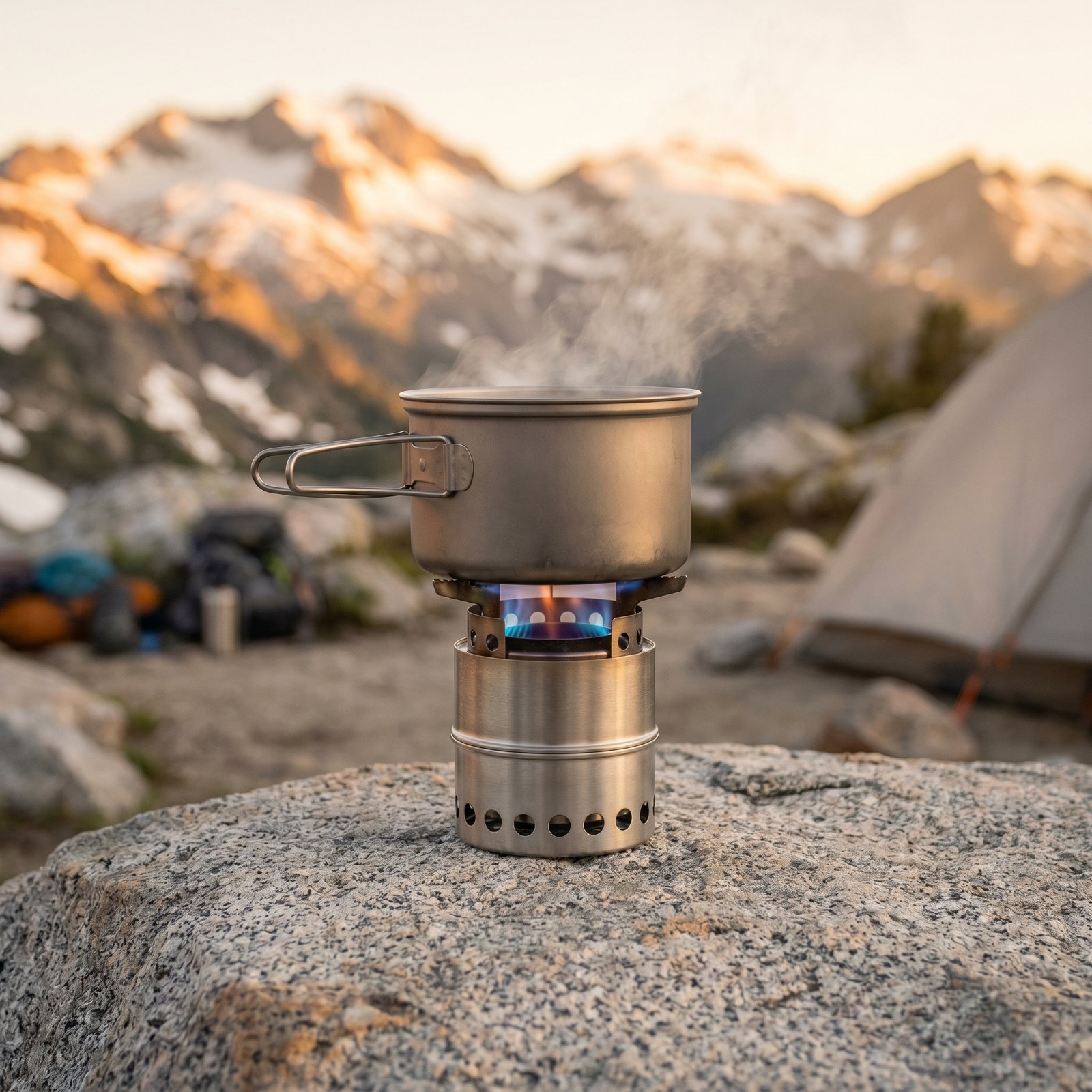

There’s a moment every camper knows well. You’ve hiked for hours, the sun is dipping behind the ridgeline, your stomach is growling, and the only thing standing between you and a hot meal is one piece of gear: your camping stove. Get it right, and you’re sipping coffee at sunrise and feasting on a hot dinner under the stars. Get it wrong, and you’re chewing cold granola bars and questioning your life choices.
A camping stove isn’t just a convenience — it’s the heart of your outdoor kitchen. It’s the difference between surviving a trip and enjoying one. But walk into any outdoor store or scroll through endless listings online, and the choices are overwhelming. Canister stoves, liquid fuel stoves, wood burners, ultralight titanium marvels, beefy two-burner systems… where do you even begin?
That’s exactly why we spent months boiling water, simmering sauces, and cooking in wind, rain, and altitude to bring you the 8 best camping stoves of 2026. Whether you’re an ultralight thru-hiker counting every gram or a family car-camper who wants pancakes at the campsite, there’s a perfect stove here for you.
Let’s get cooking. 🔥
Before we dive into the rankings, it helps to understand the main types of camping stoves, because the “best” stove depends entirely on how you camp.
Canister stoves screw onto pressurized isobutane-propane canisters and are the most popular choice for backpackers. They’re lightweight, simple, and boil water fast. Liquid fuel stoves burn white gas (and sometimes other fuels) and excel in extreme cold and high altitude, making them the choice of mountaineers and international travelers. Wood-burning stoves burn twigs and biomass you gather on-site, meaning you carry zero fuel — perfect for long off-grid trips. Finally, two-burner stoves are the big, stable propane units built for car camping, where weight doesn’t matter and cooking real meals does.
Knowing which camp you fall into makes choosing your stove dramatically easier. Now, let’s meet the contenders.
Every stove on this list was evaluated on real metrics that matter in the field.
We measured boil time for half a liter of water, tested wind resistance in exposed conditions, assessed simmer control for actual cooking (not just boiling), weighed each unit for packability, and judged overall fuel efficiency and value. A stove that boils fast but can’t simmer an egg, or one that’s light but useless in wind, didn’t make the cut. These eight earned their spots.
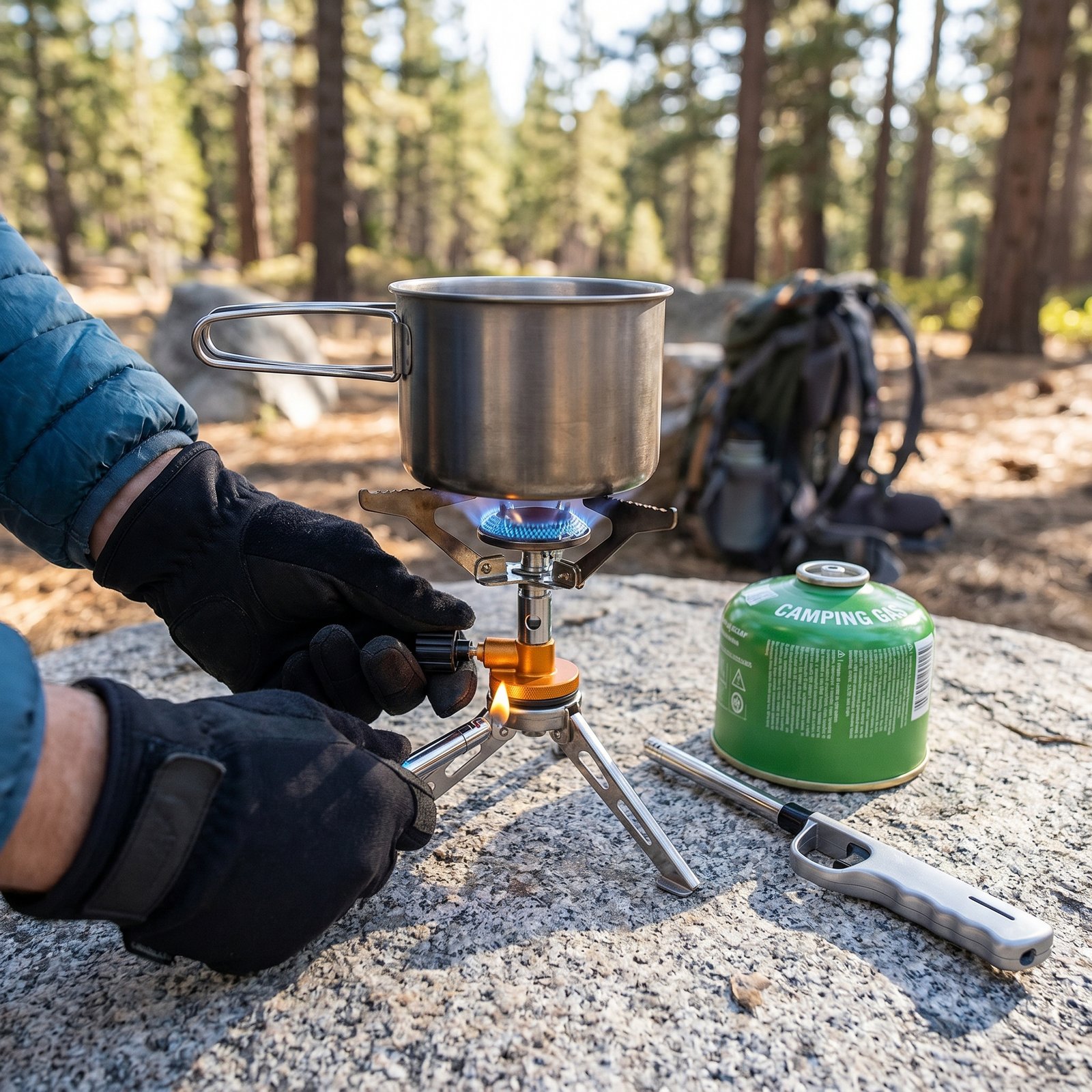
If there’s one stove that does almost everything right for the widest range of campers, it’s the classic compact canister stove in the style MSR perfected. It’s tiny enough to fit in your palm, weighs almost nothing, and screws directly onto a fuel canister in seconds.
What earns it the top spot is the balance. It boils half a liter of water in around three to four minutes, the flame control is good enough for actual cooking rather than just blasting heat, and the serrated pot supports grip your cookware securely. There’s no priming, no pumping, no mess — you just attach, click the ignition or strike a match, and you’re cooking.
It’s not the absolute lightest or the most wind-resistant option out there, but for the overwhelming majority of backpackers and weekend campers, it’s the smartest all-around choice you can make. Reliable, affordable, and proven over countless trips, this is the stove most experienced campers recommend first.
Best for: Backpackers and weekend campers who want one do-it-all stove.
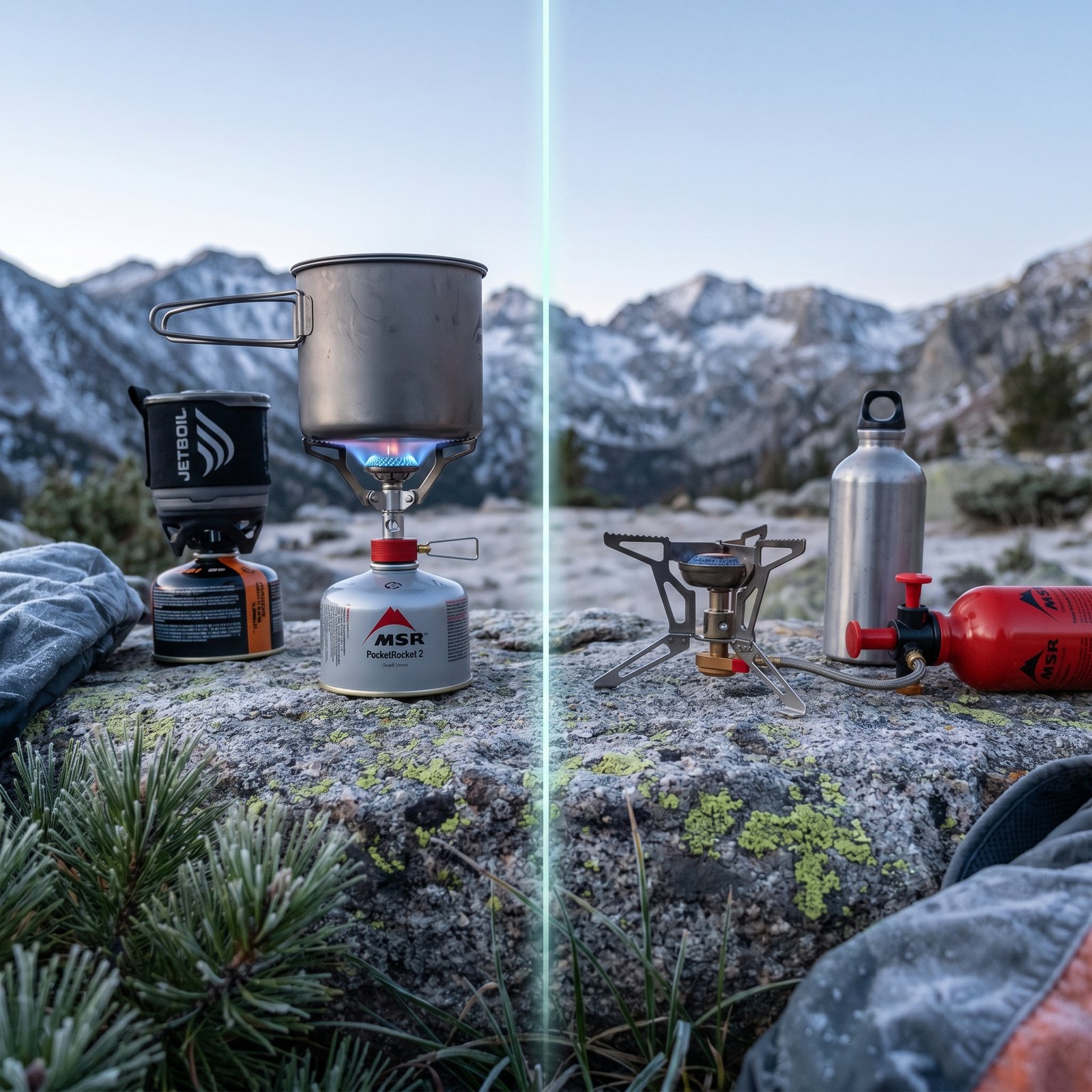
When speed and efficiency are everything — think cold mornings when you just need coffee now — an integrated canister system is unbeatable. These all-in-one units combine the burner, a heat-exchanger pot, and an insulating cozy into a single package that nests together for packing.
The magic is in the heat exchanger, those rippled fins on the base of the pot that capture far more heat than a standard pot. The result is blistering boil times — often under two minutes for half a liter — while sipping remarkably little fuel. The whole system clicks together securely, so you can even sip your drink straight from the cooking cup.
The trade-off is that these systems are optimized for boiling, not gourmet cooking, so simmering a delicate sauce isn’t their strength. But for boil-and-go meals, dehydrated dinners, and hot drinks, nothing is faster or more fuel-efficient.
Best for: Solo hikers and anyone who prioritizes fast boil times and fuel efficiency.
When the temperature plummets and the altitude climbs, standard canister stoves start to struggle as the pressurized gas inside loses its punch. This is where a liquid fuel stove earns its keep and becomes essential gear for serious mountaineering.
Burning white gas from a refillable, pumpable bottle, these stoves maintain consistent, powerful output in brutal cold where canisters fade. They’re field-maintainable too — you can disassemble and clean them on a multi-week expedition. Many also run on multiple fuel types, which is a lifesaver when traveling internationally where canisters may be hard to find.
The downsides are real: they require priming, they’re heavier, and the learning curve is steeper. But for high-altitude expeditions, winter camping, and global adventures, this is the stove that won’t let you down when everything else does.
Best for: Mountaineers, winter campers, and international travelers.
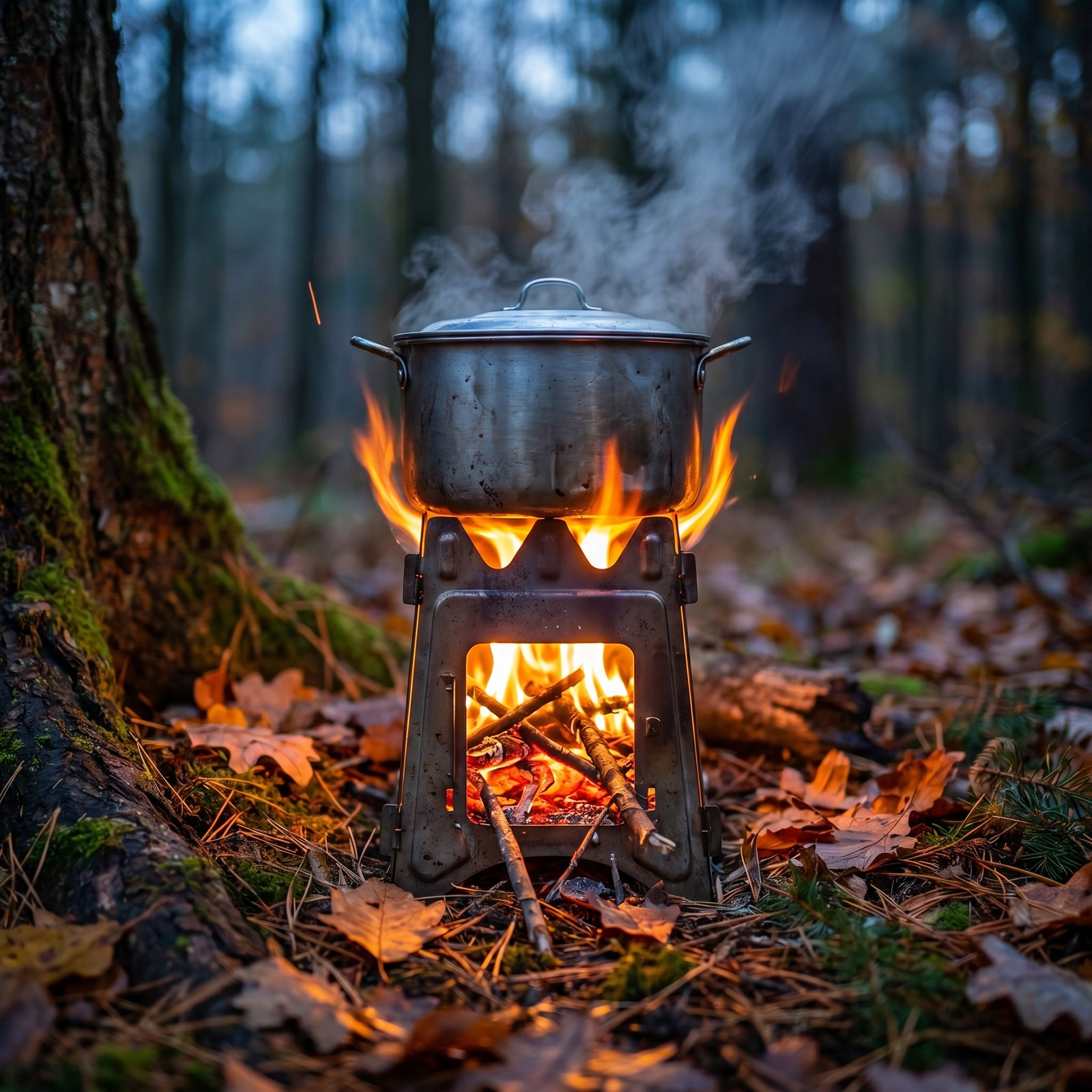
Imagine never carrying fuel again. That’s the promise of a wood-burning camp stove, which burns nothing but the twigs, pinecones, and dry biomass you gather right at your campsite. For long off-grid trips, the weight savings of leaving fuel behind add up fast.
Modern designs are surprisingly sophisticated. Many use a small battery-powered fan or a clever airflow chamber to create a near-smokeless, efficient secondary burn that puts out impressive heat. Some even include a small thermoelectric generator that turns the fire’s heat into a USB charge for your phone — genuinely useful in the backcountry.
The catch is that wet conditions make finding dry fuel a challenge, and there’s an open flame and ash to manage, so fire regulations matter. But for self-sufficient adventurers who love the ritual of a real fire, nothing beats the freedom of burning what nature provides.
Best for: Off-grid adventurers, bushcrafters, and ultralight purists who hate carrying fuel.
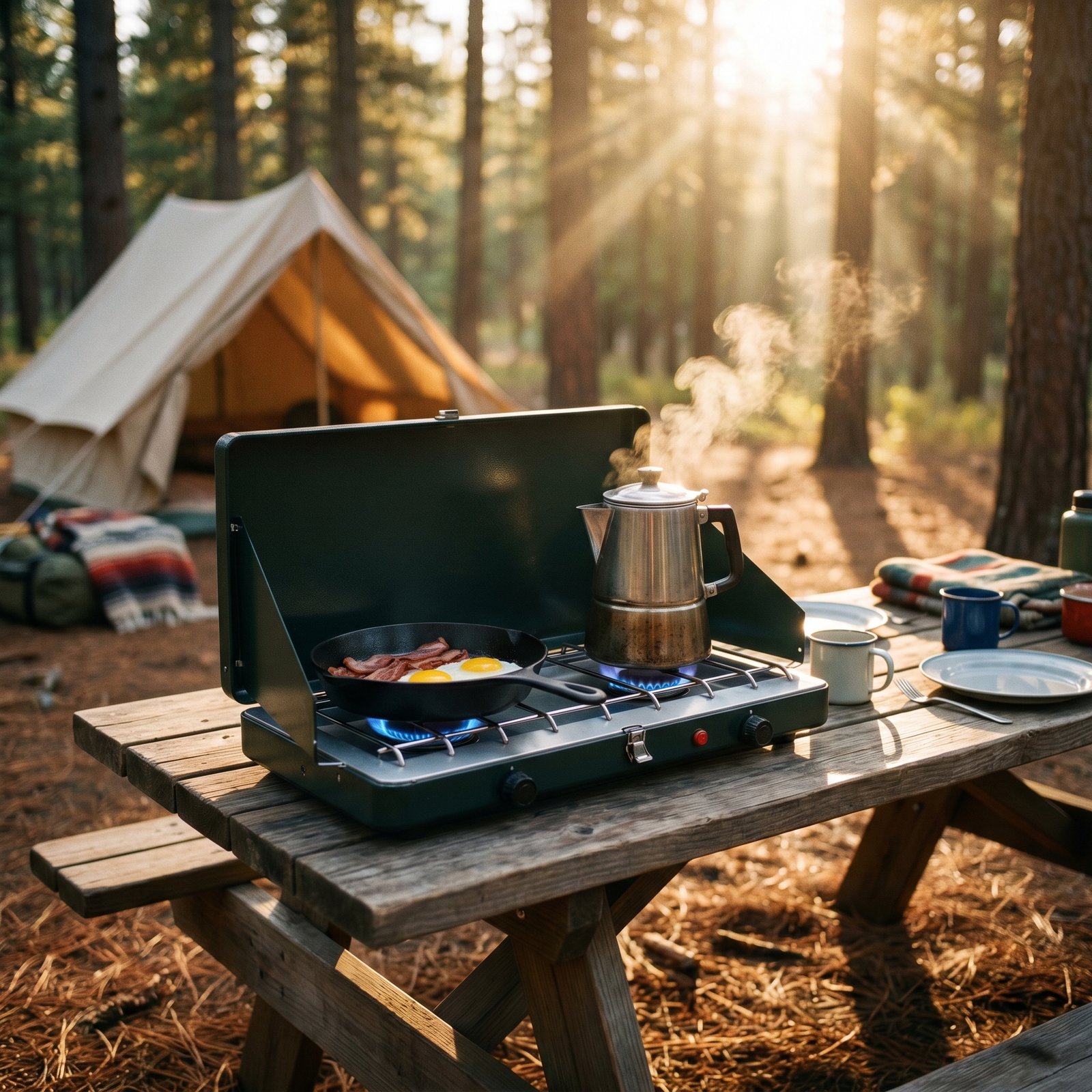
When you’re camping out of your vehicle and weight is irrelevant, it’s time to bring the actual kitchen. A classic two-burner propane stove transforms your campsite into a legitimate cooking space where you can fry bacon on one burner and percolate coffee on the other.
These stoves run off standard green propane canisters, offer excellent simmer control for real cooking, and feature fold-out wind shields that keep your flames steady in a breeze. The wide, stable cooking surface accommodates full-size pans, so family-sized meals and multi-course dinners are completely doable.
It’s bulky and heavy, so this is strictly a car-camping tool — but that’s exactly the point. If your idea of camping involves real food cooked well, this is the stove that delivers a backyard-grill experience in the wilderness.
Best for: Families and car campers who want to cook proper meals.
For the gram-counting thru-hiker, simplicity is the ultimate sophistication. An alcohol stove is little more than a small titanium or metal cup that burns denatured alcohol — no moving parts, nothing to break, and a weight measured in mere grams.
The beauty here is reliability through minimalism. There’s no valve to clog, no igniter to fail, and fuel is cheap and widely available. You simply pour in alcohol, light it, and set your pot on top. For long-distance hikers who obsess over every ounce in their pack, the weight savings over an entire trail are transformative.
It won’t win any boil-time races, wind can be a real enemy without a good windscreen, and you can’t easily adjust the flame. But for ultralight backpackers who value simplicity and featherweight packs above all, it’s a beloved classic.
Best for: Ultralight thru-hikers and minimalist backpackers.
Getting into camping shouldn’t require emptying your wallet, and the budget canister burner proves you can get reliable performance for very little money. These inexpensive screw-on burners deliver the core canister-stove experience — fast boils, easy setup, decent flame control — at a fraction of premium prices.
The build quality won’t match the high-end models, and the components may feel a touch less refined, but for casual campers and beginners, the performance-per-dollar is outstanding. Many even come with a built-in piezo igniter, so you don’t need a separate lighter to get started.
This is the perfect stove for someone testing the waters of backpacking, or for keeping as a reliable backup in your gear bin. It does the essential job well without asking much of your bank account.
Best for: Beginners, casual campers, and budget-conscious adventurers.
When you’re cooking for a crowd or boiling large pots of water, you need raw power and stability — and a high-output remote-canister stove delivers exactly that. These stoves position the fuel canister beside the burner connected by a hose, lowering the center of gravity for rock-solid stability under heavy pots.
The remote design allows you to invert the canister for liquid-feed operation in cold weather, and the wide burner head with an integrated windshield throws serious, even heat across large cookware. This makes them ideal for group meals, melting snow for water in winter, or anyone cooking with big pots.
They’re heavier and bulkier than minimalist stoves, so they’re not for the ultralight crowd. But for group leaders, basecamps, and anyone who cooks at scale outdoors, this is the workhorse that gets everyone fed.
Best for: Group trips, basecamps, and large-pot cooking.
Understanding fuel is key to choosing — and using — your stove well.
Isobutane-propane canisters are the convenient standard for backpacking: clean, easy, and no priming required, though they perform worse in extreme cold. White gas (liquid fuel) burns hot and reliable in any temperature and altitude, but requires priming and more maintenance. Propane in green bottles is the car-camping favorite — cheap, powerful, and stable. Denatured alcohol is the ultralight choice: simple and quiet, but slow. And wood/biomass is free and weightless to carry, but weather-dependent.
Match your fuel to your climate and trip style, and you’ll never be caught struggling to cook.
A stove is fire in a box, so treat it with respect. Always cook in a well-ventilated area and never inside a closed tent — stoves produce carbon monoxide that can be deadly in enclosed spaces. Set your stove on a flat, stable, non-flammable surface well away from dry grass and low branches.
Check all fuel connections for leaks before lighting, and keep a small amount of water or a way to smother flames nearby. Let the stove cool completely before packing it, and always follow local fire regulations and bans, especially in dry seasons. A few seconds of caution prevents the kind of accident that ruins a trip — or worse.
Let’s bring it home. If you want one stove for most trips, the compact canister stove is your best all-around bet. Need lightning-fast boils? Grab an integrated cooking system. Heading into deep cold or high altitude? A liquid fuel stove is essential. Car camping with the family? The two-burner propane stove brings the kitchen to camp. And ultralight hikers will love the featherweight simplicity of a titanium alcohol stove.
The truth is, the best camping stove is the one that matches your style of adventure. Think about where you camp, how many people you feed, and how much weight you’re willing to carry — then pick the stove that fits. Get it right, and every meal in the wild becomes something to look forward to.
Now get out there and cook something amazing under the open sky. 🔥
Loved this guide? Share it with your camping crew and explore our other reviews on fire starters, fuel canisters, and emergency kits — everything you need to master fire and fuel in the great outdoors.


No Comments