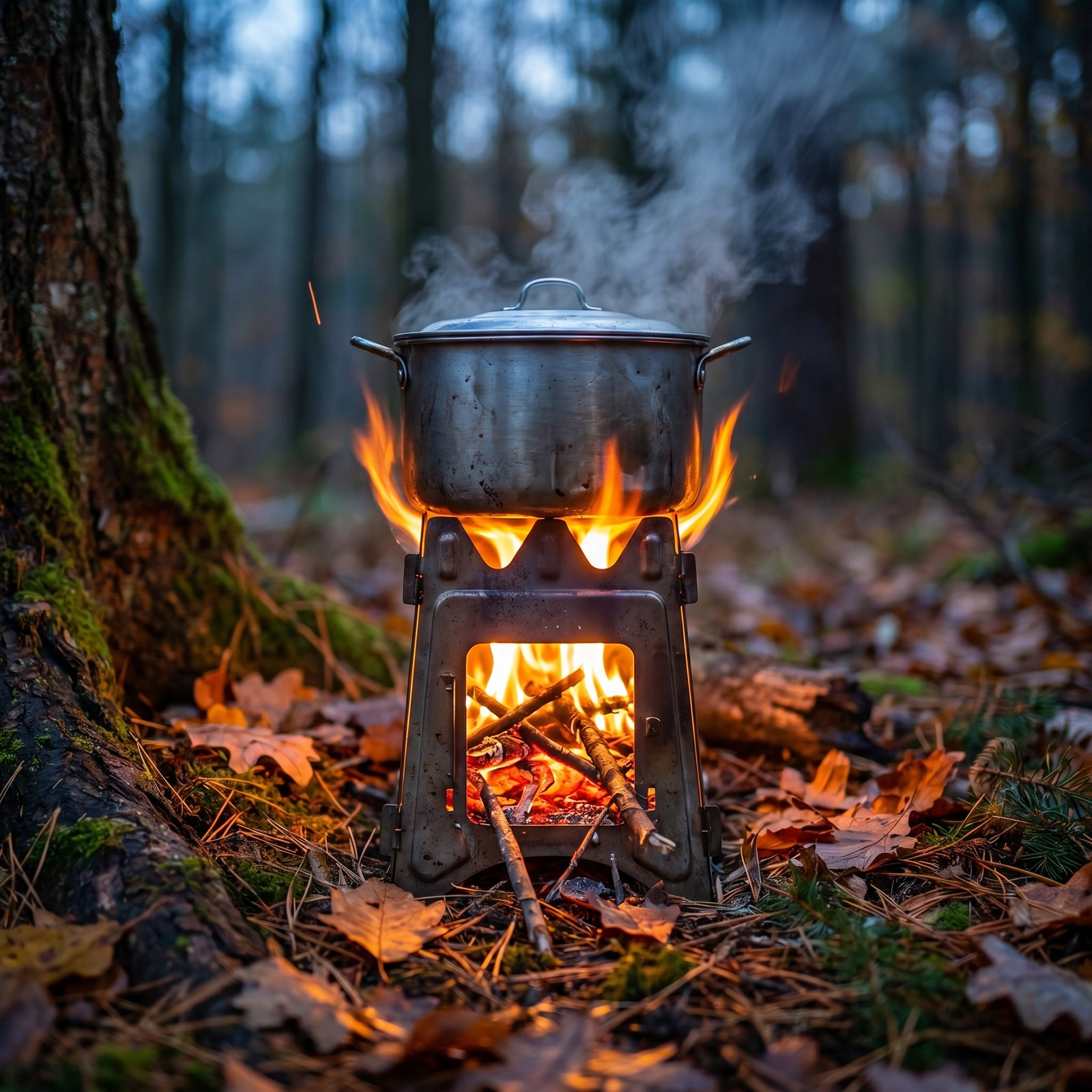

Imagine setting off on a multi-day backcountry trip and leaving all your fuel behind. No canisters weighing down your pack, no fuel bottles to worry about, no running out of gas miles from anywhere. Instead, you simply gather a handful of twigs, pinecones, and dry debris from the forest floor, and within minutes you’ve got a roaring flame cooking your dinner. This isn’t a survival fantasy — it’s exactly what a wood-burning camp stove delivers, and it’s why these clever little stoves have earned a devoted following among bushcrafters, ultralight hikers, and off-grid adventurers.
Wood-burning stoves represent a fundamentally different philosophy of outdoor cooking. While canister and liquid fuel stoves tie you to purchased fuel you must carry, a biomass stove uses the free, renewable fuel that nature provides all around you. The weight savings on long trips are real, the connection to the primal ritual of a real fire is satisfying, and modern designs have become remarkably efficient — some even harness the fire’s heat to charge your phone via USB. For the right adventurer, it’s a genuinely liberating way to cook in the wild.
But wood-burning stoves come in many forms, from simple lightweight burners to sophisticated fan-assisted and thermoelectric models, and each suits different needs and conditions. So we tested the top options — feeding them twigs, boiling water, and cooking meals across varied conditions — to bring you the 8 best wood-burning camp stoves of 2026. Whether you’re a weight-conscious thru-hiker or a bushcraft enthusiast who loves a real fire, there’s a perfect wood stove here for you. Let’s burn what nature provides. 🔥
Before we get to the rankings, it helps to understand how these stoves work, because their clever design is what makes them so effective despite burning simple twigs. Modern wood-burning stoves are far more sophisticated than just a metal can with a fire inside.
At their core, wood-burning camp stoves burn biomass — twigs, sticks, pinecones, bark, and other dry organic material — that you gather on-site, eliminating the need to carry fuel. Many use a clever double-wall or chimney design that creates strong airflow, drawing air up through the fire to produce an efficient, hot burn. The best designs achieve a secondary burn, where gases released by the burning wood are ignited again higher in the chamber, resulting in a hotter, cleaner, near-smokeless flame that extracts maximum heat from minimal fuel.
Some advanced models add a small battery-powered fan to force air into the fire for an even more efficient, hotter burn and easier lighting, while certain thermoelectric models include a generator that converts the fire’s heat into electricity to charge devices via USB. Understanding these designs helps you appreciate why a stove burning nothing but twigs can boil water efficiently. Now, let’s explore the top picks.
A few key factors will help you choose the right wood-burning stove for your needs, so let’s cover them before the rankings. Matching the stove to your style of adventure ensures you’ll be happy with your choice.
Consider the weight and packability based on your use — ultralight hikers want a light, compact, often collapsible stove, while basecamp users can accept more heft for extra features. Think about efficiency and burn quality, since designs that achieve a clean secondary burn extract more heat from less fuel and produce less smoke. Decide whether you want fan assistance for a hotter, easier burn, or thermoelectric charging to power devices, both of which add capability but also weight, complexity, and the need for the fan’s own power.
Also weigh stability and pot support for safely holding your cookware, build quality and materials like stainless steel or titanium for durability and weight, and overall value. The best wood-burning stove balances these factors for how and where you’ll use it. Keep these criteria in mind as we explore the top picks, and you’ll find the stove that fits your adventures.
Each stove on this list earned its place through real-world use. We tested burn efficiency and how cleanly each stove burned with minimal fuel, measured boil times for water, evaluated ease of lighting and feeding the fire, assessed stability and pot support, weighed each for packability, and judged build quality and overall value. For models with fans or thermoelectric generators, we tested those features too. Only stoves that delivered efficient, reliable wood-burning performance made the final list.
Taking our top spot is the efficient double-wall twig stove, which delivers excellent wood-burning performance in a practical, well-rounded package. Its clever double-wall design creates strong airflow and a clean secondary burn, producing a hot, efficient, near-smokeless flame from nothing more than twigs and forest debris.
What earns it the overall crown is its outstanding balance of efficiency, simplicity, and reliability. The double-wall construction extracts impressive heat from minimal fuel, boiling water efficiently while producing little smoke, and there’s no battery or fan to fail — just gather fuel, light it, and feed it as needed. It offers solid pot support for stable cooking and packs down reasonably for transport, making it a versatile choice for a wide range of adventures.
For the majority of people seeking a dependable wood-burning stove that burns cleanly and efficiently without added complexity, the efficient double-wall twig stove is the smart, proven choice. It captures the core appeal of wood-burning — free fuel, no canisters, real fire — in a refined, reliable design that just works. It’s the wood stove most enthusiasts would recommend first.
Best for: Most users wanting an efficient, reliable, no-fuss wood-burning stove.
For those who want maximum efficiency and the hottest, easiest burn, a fan-assisted gasifier wood stove takes wood-burning to the next level. These stoves use a small battery-powered fan to force air into the fire, creating an intensely hot, highly efficient gasifier burn that lights easily and produces minimal smoke.
The advantage of fan assistance is impressive performance. The forced airflow dramatically improves combustion, achieving a hot, clean burn that boils water quickly and extracts maximum heat from minimal fuel, while also making the stove much easier to light and keep going. The gasifier design ignites the wood gases for a near-smokeless flame, and adjustable fan speeds let you control the intensity of the burn.
The trade-off is that you depend on the fan’s battery, which must be charged, adding a small complexity and power requirement to your setup. But for those who want the most efficient, hottest, and easiest wood-burning experience and don’t mind keeping the fan powered, a fan-assisted gasifier stove delivers outstanding performance. It’s the choice for those who want their twig stove to burn like a high-tech furnace.
Best for: Users wanting maximum efficiency and the hottest, easiest wood burn.
For the tech-savvy adventurer who wants to cook and charge devices off-grid, a thermoelectric power-generating wood stove is a remarkable piece of gear. These stoves include a built-in thermoelectric generator that converts the fire’s heat into electricity, letting you charge your phone or other USB devices while you cook over burning twigs.
The genius here is dual functionality. As the stove burns wood to cook your meal, the thermoelectric generator harvests the otherwise-wasted heat and turns it into usable power, charging devices via USB and sometimes powering an internal fan for a more efficient burn. For long off-grid trips where keeping a phone or GPS charged matters, the ability to generate power from your cooking fire is genuinely useful and reduces the need to carry as many power banks.
The trade-offs are added weight, complexity, and cost compared to simpler stoves, and the charging output is modest rather than rapid. But for off-grid adventurers who value the ability to generate electricity from their cooking fire, a thermoelectric stove offers a unique and practical combination of cooking and charging. It’s the choice for those who want their stove to keep their devices alive in the backcountry.
Best for: Off-grid adventurers who want to charge devices while cooking.
For the gram-counting hiker who loves the idea of fuel-free cooking, a collapsible titanium wood stove offers wood-burning capability at minimal weight. Crafted from ultralight titanium and designed to fold flat or break down into a compact package, these stoves let you cook with gathered fuel while keeping your pack light.
The appeal for ultralight hikers is obvious: the freedom of burning free, gathered fuel combined with the featherweight, packable convenience that titanium construction provides. These stoves fold down nearly flat for easy packing, weigh remarkably little, and still burn twigs efficiently to boil water and cook meals. For long-distance hikers who want to avoid carrying fuel canisters over big miles, the weight savings can be substantial.
The trade-off is that minimalist designs may offer less wind protection and require more attentive fire-feeding than bulkier, more efficient models, and titanium stoves can warp slightly over heavy use. But for ultralight backpackers who embrace the rhythm of gathering and feeding wood and want the lightest possible fuel-free stove, a collapsible titanium wood stove is a beloved, weight-saving choice. It’s the lightweight gateway to fuel-free cooking.
Best for: Ultralight hikers wanting fuel-free cooking at minimal weight.
When you’re cooking for a group or want a more substantial cooking fire, a large-capacity wood stove provides the size and power to handle bigger pots and feed more people. These larger stoves hold more fuel, produce a bigger burn, and offer a wider, more stable cooking surface for group meals.
The advantage of a larger stove is capacity and capability. The bigger firebox holds more wood for a longer, more powerful burn, while the wider pot support accommodates larger pots needed to cook for several people, making it ideal for group trips, basecamps, and family outings. The greater thermal output also helps in cooler conditions and when boiling larger volumes of water for the group.
The trade-off is that large-capacity stoves are heavier and bulkier, so they’re better suited to car camping, basecamps, and group trips than ultralight solo backpacking. But for those cooking for a crowd who want the free-fuel benefits of wood-burning in a larger, more capable form, a large-capacity wood stove delivers. It’s the choice for group leaders and families who want to cook substantial meals over a real wood fire.
Best for: Groups, families, and basecamps cooking larger meals.
Wood-burning cooking is inherently economical since the fuel is free, and an affordable stainless steel wood stove makes the stove itself budget-friendly too. These inexpensive stoves deliver the core wood-burning experience — burning gathered twigs to cook your food — in a durable, simple stainless steel design at a low price.
The value proposition is excellent. While the build may be simpler and heavier than premium titanium or fan-assisted models, stainless steel is durable and reliable, and the stove burns twigs efficiently enough to boil water and cook meals using free, gathered fuel. For beginners curious about wood-burning stoves, backup use, or anyone on a tight budget, the low cost combined with free fuel makes it an extremely economical way to cook outdoors.
This is the perfect entry point for those wanting to try wood-burning cooking without a big investment, or for keeping as an affordable, fuel-free backup to other stoves. It does the essential job dependably, and since you never buy fuel, the long-term cost is remarkably low. For budget-conscious adventurers, an affordable stainless steel wood stove is a smart, practical choice.
Best for: Beginners and budget-conscious users wanting affordable fuel-free cooking.
For maximum flexibility, a hybrid wood and alcohol stove lets you burn gathered wood when available or switch to alcohol fuel when conditions demand, giving you the best of both worlds. These versatile stoves accept biomass for fuel-free cooking but also accommodate an alcohol burner for when dry wood is scarce or fire restrictions apply.
The strength here is adaptability. On dry days with abundant wood, you cook fuel-free by burning gathered twigs; on wet days when dry wood is hard to find, during fire bans where open wood fires are prohibited, or when you simply want quick convenience, you switch to a controllable alcohol flame. This flexibility means you’re never stuck unable to cook, combining the free-fuel appeal of wood-burning with the reliability of a backup fuel source.
The trade-off is carrying the alcohol burner and some fuel as backup, slightly offsetting the pure weight savings of wood-burning. But for adventurers who want the freedom of wood-burning with a dependable fallback for wet conditions or fire restrictions, a hybrid wood and alcohol stove offers excellent versatility. It’s the choice for those who want fuel-free cooking without ever being caught unable to make a meal.
Best for: Adventurers wanting wood-burning with an alcohol backup for flexibility.
For those who prioritize easy packing, a flat-pack folding wood stove disassembles into flat panels that store with minimal bulk, slipping easily into a pack. These stoves assemble from interlocking plates into a sturdy burning chamber and break back down flat when you’re done, making them wonderfully space-efficient.
The appeal is packability and simplicity. The flat-pack design takes up almost no space in your bag when disassembled, then quickly assembles into a stable, efficient burning chamber for cooking with gathered fuel, before flattening again for easy storage. This makes it ideal for those who want a wood-burning stove that doesn’t take up precious pack space and is simple to set up and break down.
The trade-off is that assembling and disassembling the panels takes a moment, and flat-pack designs may offer slightly less refined airflow than dedicated double-wall stoves. But for adventurers who value ultra-compact storage and a simple, sturdy wood-burning setup, a flat-pack folding wood stove delivers excellent packability. It’s the choice for those who want fuel-free cooking that virtually disappears in their pack.
Best for: Packing-conscious users who want ultra-compact, flat-storing wood stoves.
A few key techniques will help you get the most from your wood-burning stove, so let’s cover them. Mastering these makes wood-burning cooking easy and enjoyable rather than frustrating.
Gather and prepare your fuel before lighting, collecting plenty of dry twigs, sticks, and tinder in varied sizes, since you’ll need to feed the fire continuously and dry, well-sorted fuel burns far better than damp or unsorted material. Start small with good tinder and kindling, building the fire gradually, and use dry tinder like birch bark or a fire-starter to get it going quickly. Feed the fire steadily with small pieces, since these stoves work best with frequent small additions rather than large logs.
It also helps to shield the stove from wind for a steady burn, keep dry fuel reserves sheltered for continued cooking, and in wet conditions, find dry wood from standing dead branches or split larger pieces to reach the dry interior. Always follow fire regulations and check for fire bans before using a wood stove, and never leave it unattended. With these techniques, your wood-burning stove will reliably cook your meals using nothing but the fuel nature provides.
Using a wood-burning stove responsibly means following important safety practices and regulations, so let’s cover the essentials. Because these stoves involve an open biomass fire, awareness here is especially important.
Always check local fire regulations and bans before using a wood-burning stove, since open fires — including wood stoves — are often prohibited during dry seasons or in certain areas, and using one during a ban is both dangerous and illegal. Set up your stove on a stable, non-flammable surface well clear of dry grass, leaves, and overhanging branches, and keep a way to fully extinguish the fire nearby. Never leave the stove unattended while burning.
When finished, fully extinguish the fire and ensure all embers and ash are completely cold before packing up or leaving, since wood stoves produce embers and ash that can reignite. Be mindful of leaving no trace, scattering cold ash appropriately and packing out any debris. Cook in a well-ventilated outdoor area, never inside a tent or enclosed space. Following these safety practices and respecting fire regulations ensures your wood-burning stove use is safe, legal, and responsible, protecting both you and the wild places you love.
Let’s bring it home. For one efficient, reliable wood-burning stove that handles most needs, the efficient double-wall twig stove is our top overall pick — clean-burning, dependable, and refreshingly simple. Want the hottest, easiest burn? Grab a fan-assisted gasifier stove. Need to charge devices off-grid? A thermoelectric power-generating stove cooks and powers your gear at once.
Ultralight hikers will love a collapsible titanium wood stove, groups should choose a large-capacity model, and budget-minded adventurers can’t go wrong with an affordable stainless steel stove. For maximum flexibility, a hybrid wood and alcohol stove offers a backup fuel option, while packing-conscious users will appreciate a flat-pack folding stove.
The bottom line is that wood-burning stoves offer a uniquely liberating way to cook outdoors — free, renewable fuel, no canisters to carry, and the primal satisfaction of a real fire. The best one for you depends on your weight priorities, desired features, and the conditions you’ll face, so choose accordingly and always respect fire regulations. Get it right, and you’ll discover the joy of cooking anywhere with nothing but the twigs at your feet. Now get out there, gather some kindling, and cook a meal over the fuel nature provides. 🔥
Found this guide helpful? Bookmark it, share it with your fellow adventurers, and explore our other reviews on backpacking stoves, camping stoves, and fire starters — your complete resource for mastering fire and fuel in the great outdoors.


No Comments