
You bought a quality refillable butane lighter precisely so you’d never have to toss another disposable in the trash. It’s sleek, it’s reliable, and it should last you years. But then it sputters, the flame goes weak, and you find yourself staring at the bottom of the lighter wondering what to do next. For something that seems like it should be simple, refilling a butane lighter trips up an astonishing number of people — and doing it wrong can leave you with a weak flame, a leaking lighter, or even a unit that won’t light at all.
Here’s the good news: refilling a butane lighter the right way takes less than a minute, costs pennies, and once you know the proper technique, you’ll never struggle with it again. The difference between a frustrating, sputtering refill and a flawless one comes down to a few simple steps that most people skip — like bleeding the air from the tank and using quality fuel. Master these, and your refillable lighter will reward you with a strong, consistent flame for years to come.
This complete guide walks you through everything: the exact step-by-step refilling process, the common mistakes that ruin lighters, how to troubleshoot problems, and the maintenance habits that keep your lighter performing like new. Whether you’ve got a slim EDC lighter or a heavy-duty triple-jet torch, by the end of this guide you’ll refill it like a pro. Let’s get that flame back to full strength. 🔥
Before we get to the steps, it’s worth understanding why proper refilling technique matters so much, because the right approach prevents the most common lighter problems before they start. Refilling isn’t just about adding fuel — it’s about doing it in a way that keeps your lighter performing reliably.
When you refill incorrectly, several things can go wrong. Trapped air in the fuel tank is the number one cause of weak, sputtering flames, because air mixed with butane prevents the lighter from delivering consistent fuel to the flame. Using low-quality butane introduces impurities that clog the tiny jet nozzle over time, gradually weakening your flame until the lighter barely works. And rushing the process without letting the fuel settle can lead to poor performance and even safety issues.
Doing it right, by contrast, ensures a strong, consistent flame, prevents clogs and leaks, and dramatically extends the life of your lighter. The few extra seconds it takes to bleed the air and use proper fuel pay off enormously in reliable performance. Understanding why each step matters makes it much easier to remember to do them — and that’s the secret to a lighter that just keeps working.
Refilling a butane lighter requires very little, but having the right supplies on hand makes the process smooth and successful. Gathering these few items before you start ensures you won’t be caught mid-refill without something you need.
First and most important is high-quality, refined butane — ideally a triple-refined (or higher) premium butane, since the purity of your fuel directly affects how well your lighter performs and how long it lasts. Cheap, low-quality butane is the silent killer of refillable lighters, leaving residue that clogs the jet nozzle, so this is not the place to cut corners. A good can of premium butane is inexpensive and refills your lighter many times over.
You’ll also want a small flathead screwdriver or similar tool for adjusting the flame setting and bleeding the tank, and a clean, well-ventilated workspace away from any open flames, sparks, or heat sources, since you’re working with flammable gas. That’s it — with quality butane, a small tool, and a safe space, you have everything you need to refill your lighter properly and safely.
Now for the main event. Follow these steps in order, and you’ll achieve a perfect refill every time. The whole process takes less than a minute once you’re familiar with it, but each step plays an important role, so don’t skip any.
Step 1: Ensure the lighter is empty and cool. Before refilling, make sure your lighter is fully out of fuel and has cooled to room temperature if it was recently used. Refilling a warm lighter or one with old fuel still inside can cause poor mixing and inconsistent performance.
Step 2: Turn the flame adjustment to its lowest setting. Using your small screwdriver, turn the flame adjustment dial (usually on the bottom or side) all the way down to the minimum. This prevents over-pressurizing the tank during refilling and protects against a dangerously large flame when you first relight.
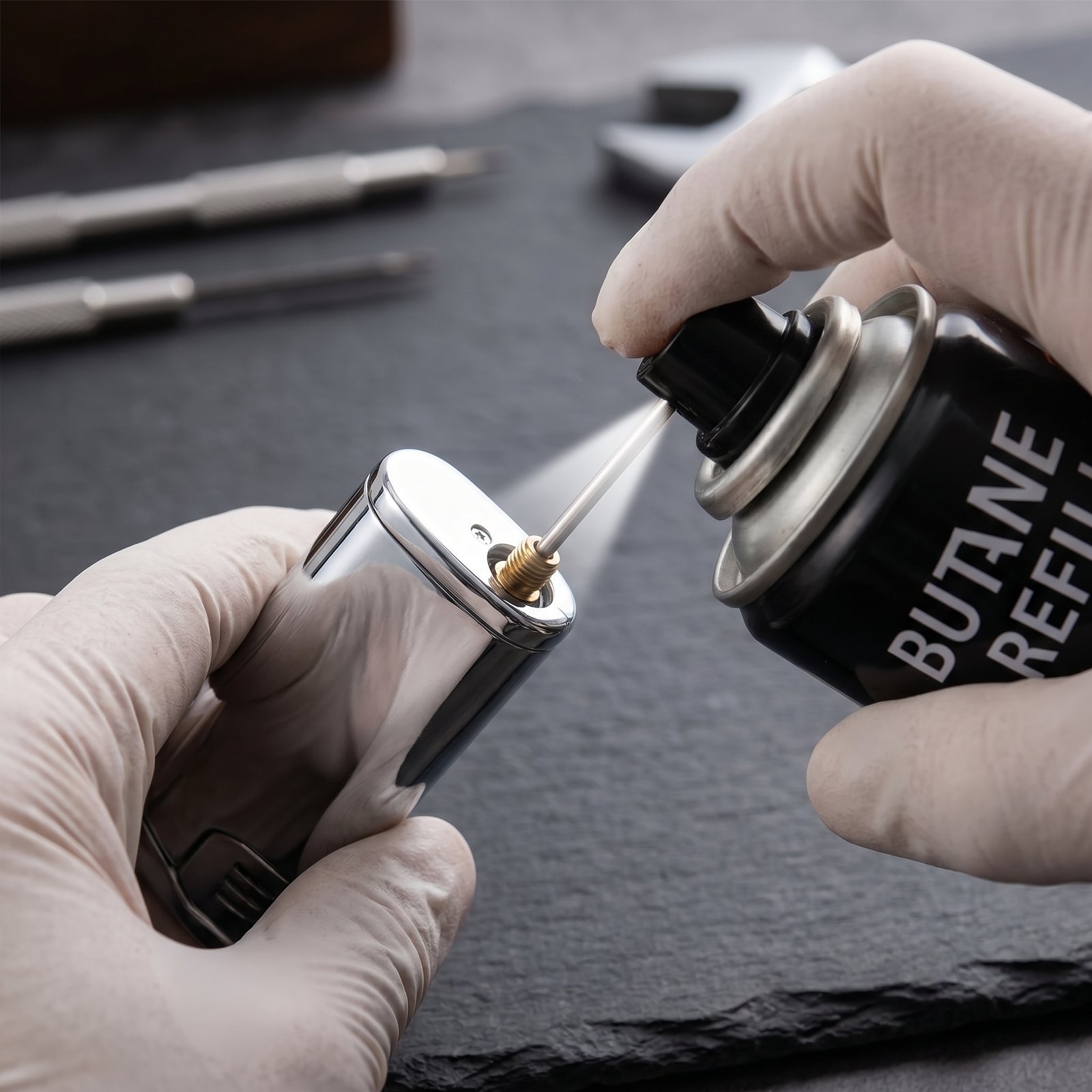
Step 3: Bleed the air from the tank. This is the step most people skip, and it’s the most important one. Hold the lighter away from your face and press the refill valve (the small nozzle on the bottom) with your screwdriver to release any trapped air, listening for the hiss to stop. Bleeding out trapped air is the single best way to prevent weak, sputtering flames after refilling.
Step 4: Refill with butane. Hold both the butane can and the lighter upside down, with the lighter’s refill valve pointing straight up to meet the can’s nozzle. Press the can’s nozzle firmly and squarely onto the valve and hold for a few seconds, then release. Repeat a couple of short bursts rather than one long press. Holding both upside down ensures liquid butane (not just gas) flows into the tank for a proper fill.
Step 5: Let the lighter rest. After refilling, set the lighter aside for a minute or two. The butane enters the tank cold and needs time to settle and warm to room temperature before it will ignite properly. Rushing to light it immediately often results in a weak or failed flame, so patience here pays off.
Step 6: Adjust the flame and test. Finally, turn the flame adjustment back up to your desired level and ignite the lighter. Start low and increase gradually to your preferred flame size. If it lights with a strong, steady flame, you’ve done it right — your lighter is refueled and ready to go.
Even with the steps above, a few common mistakes can sabotage your refill, so let’s call them out specifically so you can sidestep them. Avoiding these pitfalls is often the difference between a flawless refill and a frustrating one.
The biggest mistake is skipping the air-bleeding step, which leaves trapped air in the tank and causes the weak, sputtering flames that frustrate so many people — always bleed the tank before refilling. Another frequent error is using cheap, low-quality butane, which clogs the jet nozzle over time and gradually destroys your lighter’s performance; premium refined butane is always worth it. Not holding the lighter and can upside down is another common slip, resulting in gas rather than liquid butane entering the tank and a poor, incomplete fill.
Other mistakes include lighting the lighter immediately after refilling without letting it rest, over-pressurizing by refilling with the flame set high, and refilling near heat or flame, which is a genuine safety hazard. Steering clear of these errors ensures every refill goes smoothly and keeps your lighter performing at its best. A little awareness of these pitfalls saves a lot of frustration.
Sometimes a lighter still misbehaves after refilling, but most problems have simple causes and solutions. Before assuming your lighter is broken, work through these common issues — chances are you can fix it in moments.
If your lighter won’t light or has a weak flame right after refilling, the most likely culprit is trapped air, so bleed the tank thoroughly and refill again, making sure to hold everything upside down. The fuel may also simply be too cold — give the lighter a few minutes to reach room temperature before trying again. If the flame is inconsistent or sputtering, trapped air or low-quality fuel residue is usually to blame, so a thorough bleed-and-refill with premium butane often solves it.
If the lighter still won’t work after a proper bleed and refill, the jet nozzle may be clogged with residue from old or cheap fuel — gently clearing the nozzle with a blast of compressed air or careful cleaning can restore the flame. Persistent leaks or failures may indicate a worn seal needing replacement. In most cases, though, the fix is simply bleeding trapped air, using quality butane, and allowing the fuel to warm — a sequence that resolves the vast majority of post-refill problems.
Refilling is only part of caring for your lighter; a little ongoing maintenance keeps it performing like new for years. These simple habits prevent problems before they start and protect your investment in a quality refillable lighter.
The most impactful habit is always using premium, refined butane, since high-purity fuel leaves minimal residue and keeps the jet nozzle clear — this one practice prevents most performance issues over a lighter’s life. Periodically clearing the jet nozzle of any debris with compressed air keeps the flame strong and consistent, especially if you notice it weakening. Bleeding the tank during refills, as covered above, keeps trapped air from degrading performance over time.
Beyond fuel and nozzle care, store your lighter properly in a cool, dry place away from extreme heat, and keep the flame adjustment at a sensible setting rather than constantly maxing it out, which conserves fuel and reduces strain. Occasionally checking for leaks and worn seals lets you address small issues before they become big ones. With these easy maintenance habits, a quality butane lighter will deliver reliable, strong flame for many years, proving the value of choosing refillable in the first place.
Working with pressurized, flammable gas calls for some basic safety awareness, so let’s cover the key precautions that keep refilling and using your lighter safe. These simple rules take seconds to follow and prevent accidents.
Always refill in a well-ventilated area away from any open flames, sparks, cigarettes, or heat sources, since butane is highly flammable and you don’t want stray gas igniting. Don’t over-fill or over-pressurize the lighter, and keep the flame adjustment low during refilling to avoid a dangerously large flame on ignition. After refilling, wipe away any excess butane and let the lighter rest before lighting, ensuring no gas has pooled on the exterior.
When using and storing your lighter, keep it away from extreme heat and never leave it in a hot car or direct sun where the pressurized fuel could be affected, and store it out of reach of children. If you ever smell gas leaking or notice the lighter feels wet with fuel, stop and address the issue before igniting. Following these straightforward safety habits ensures that refilling and using your butane lighter remains a safe, routine part of owning quality fire gear.
Refilling a butane lighter properly is one of those small skills that pays off enormously, transforming a sputtering, frustrating lighter back into the reliable, strong-flamed tool you paid for. As you’ve seen, the process takes less than a minute and comes down to a few key steps: emptying and cooling the lighter, turning the flame low, bleeding the trapped air, refilling with the lighter and can held upside down, letting it rest, and adjusting the flame.
The two secrets that separate a perfect refill from a poor one are bleeding the air from the tank and always using premium, refined butane — get those two right and you’ll avoid the weak flames and clogs that plague so many lighters. Combine proper refilling with simple maintenance habits like clearing the nozzle and storing the lighter well, and your refillable lighter will deliver dependable flame for years, easily outlasting countless disposables.
So the next time your butane lighter runs dry, you won’t reach for a replacement or struggle with a frustrating refill. You’ll bleed the tank, fill it right, let it settle, and flick it back to life with a strong, steady flame — refilling like the pro you now are. That’s the whole point of choosing refillable: a quality lighter that, with just a little care, keeps serving you faithfully for the long haul.
Refill smart, maintain well, and keep that flame burning strong. 🔥
Found this guide helpful? Bookmark it for your next refill, share it with a fellow lighter owner, and explore our other guides on windproof lighters, refillable lighters, and butane vs electric lighters — your complete resource for everything ignition.



No Comments